

The public sector stands at a pivotal moment. Rising demand, widening inequalities and increasing pressure across health, social care, housing, education and employment support mean that traditional, organisation-led models can no longer meet the complexity of need within our communities.
Neighbourhood Health offers a clear route forward.
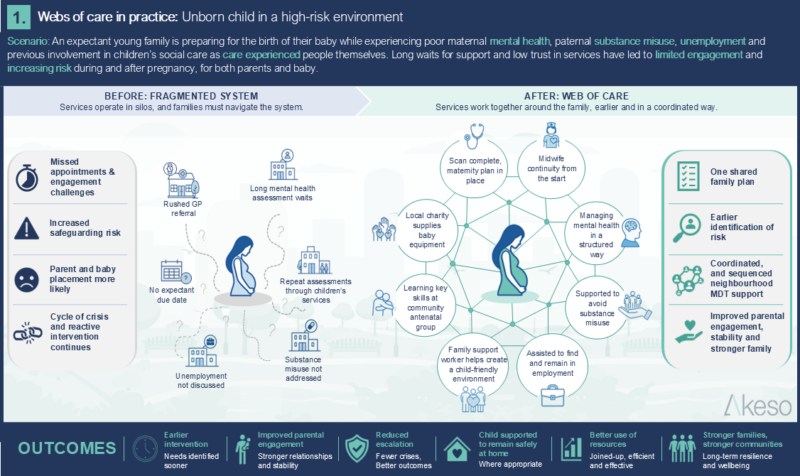
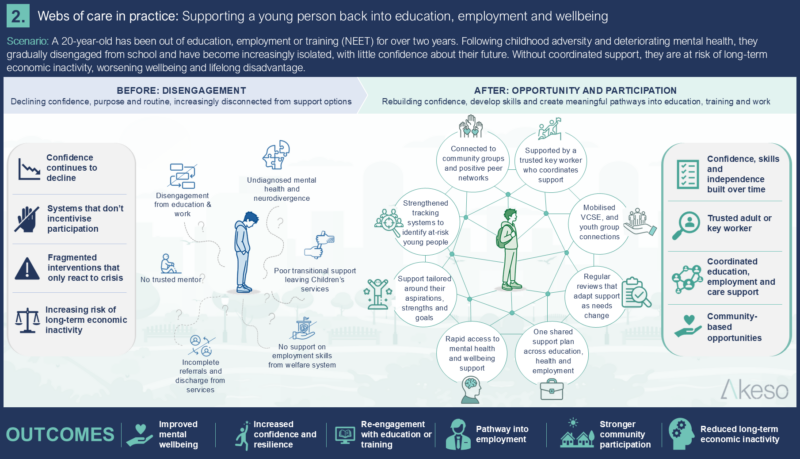
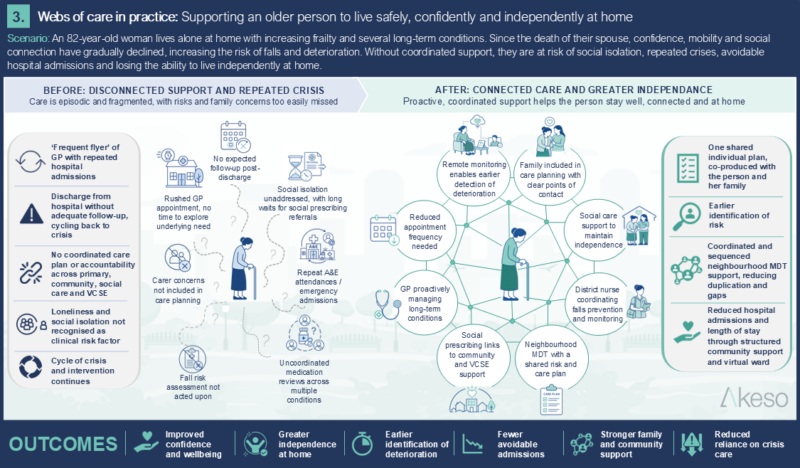
By bringing care closer to home and organising support around people, place and prevention, Neighbourhood Health creates the foundations for a more integrated, proactive and sustainable system. It brings together NHS providers, local government, social care and the voluntary, community and social enterprise sector to deliver joined-up support that reflects the needs, assets and lived experience of local populations.
But Neighbourhood Health is only the beginning.
At Akeso, we believe the real opportunity lies in moving beyond Neighbourhood Health towards Neighbourhood Models. These models take a more holistic view of wellbeing, aligning health and care with wider public services such as housing, education, welfare, policing and employment support. In doing so, they create a practical route to wider public sector reform, shifting systems away from fragmented, reactive services and towards coordinated, preventative support centred on people and communities.
This approach directly supports the three key shifts at the heart of the Government’s Health Mission: moving care from hospital to community, shifting from treatment to prevention, and making better use of digital infrastructure to improve how care is delivered. It also recognises that many of the factors shaping health and wellbeing sit outside the NHS, from poor housing and economic inactivity to social isolation and access to local support.
The case for action is clear.
National policy has created a strong mandate for neighbourhood working, but many systems continue to face challenges in translating ambition into delivery. The question is no longer whether neighbourhood models are needed, but how they can be implemented in a way that is practical, scalable and sustainable.
Our latest white paper draws on Akeso’s experience working with systems across the UK to design and deliver neighbourhood approaches. It explores what Neighbourhood Health means in practice, how Neighbourhood Models can enable wider public sector reform, and what organisations, places and national teams need to do to move from policy intent to meaningful change.
In doing so, we highlight the importance of integrated neighbourhood teams, shared decision-making, population insight, community voice and aligned governance. We also recognise that success depends on collaboration across the whole ecosystem: NHS organisations, local authorities, social care, VCSE partners, public services, communities and the people who use them.
“As the national direction becomes clearer, those systems that are able to act decisively, grounded in local insight and supported by the right capabilities, will be best placed to realise the full potential of neighbourhood health.” Sarah Pinto-Duschinsky, Managing Partner.
To find out more, download our report here: Akeso Beyond Neighbourhood Health White Paper.
Contact our experts