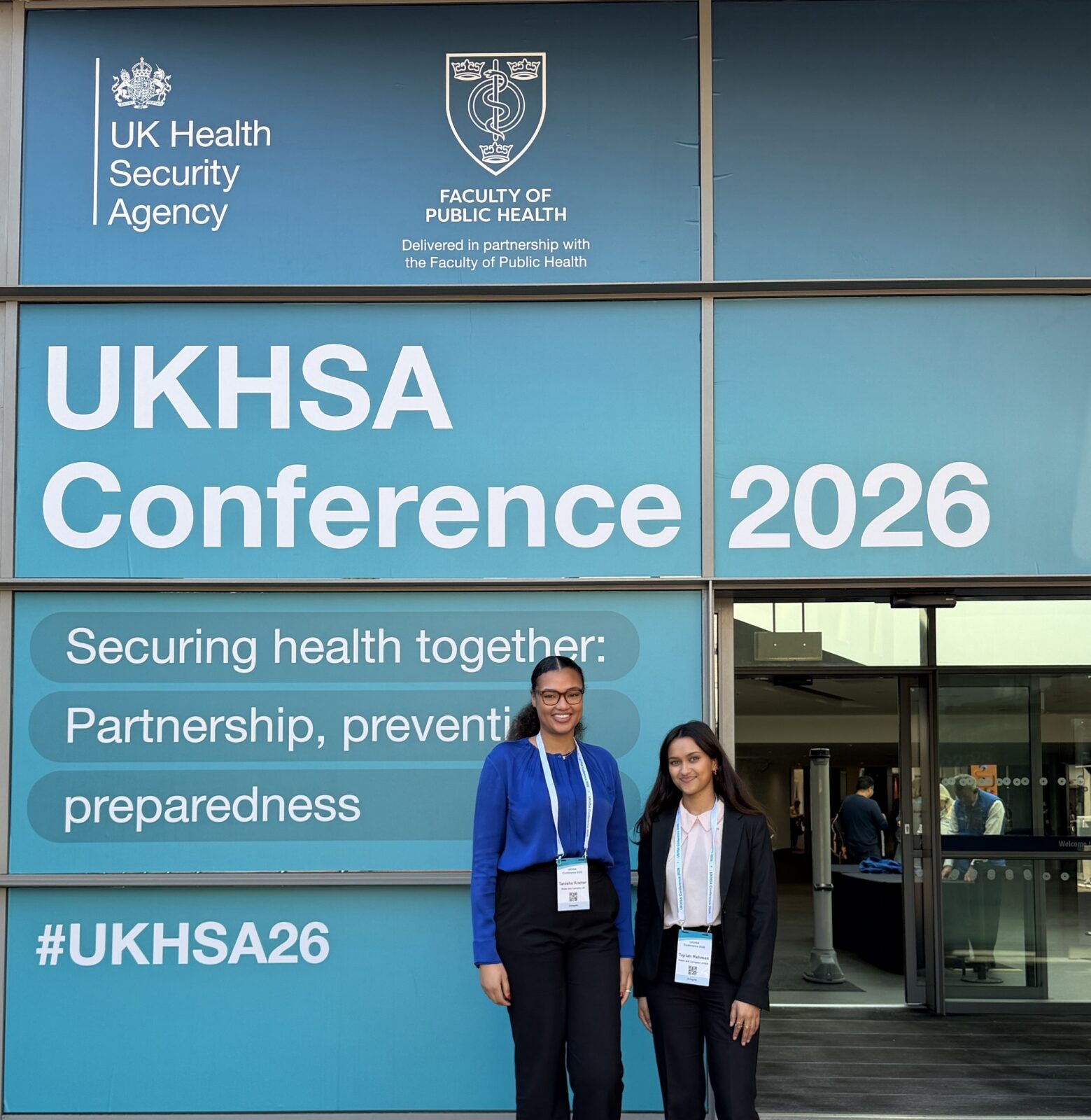
Last month, Akeso colleagues attended the UK Health Security Agency (UKHSA) conference in Manchester, which brought together 1,200 professionals from public health, the NHS, academia and industry. The theme of this year’s conference was partnership, and it ran through every session, from pandemic planning to outbreak response. Our consultants, Tanisha Kramer and Tajrian Rahman have shared some reflections from the day.
One message stood out: the biggest risks in health security often come from what we cannot see: the cases our surveillance misses and the people our data and services leave out. True partnership is how we close those gaps. Four lessons from the day illustrate why.
Decisions are only as good as what we can observe
Exercise Pegasus was the largest pandemic preparedness exercise undertaken across UK government, comprising more than 200 exercise events run between September and November 2025. It tested the response to a fictional virus over the critical first eight weeks of a pandemic.
A Red Team of around 400 people designed the scenario, while participating organisations had to interpret events from the information available to them, as they would in a real outbreak. Live modelling, from global spread down to a simulation of 70 million people in the UK, meant each decision altered the course of the outbreak. Surveys of around 2,000 members of the public informed how the simulated population behaved.
Asked whether responders had underestimated the scale of the outbreak, the modelling lead confirmed they had: surveillance is difficult, and decisions are inevitably based on what can be seen. The exercise was built on a principle relevant to any organisation: it is not a test if you cannot fail. The cross-government evaluation report is due on GOV.UK this winter, although organisations have been encouraged to act on lessons already identified rather than wait for its .
Trust must be built before a crisis
In March, the University of Kent was at the centre of the largest meningococcal group B cluster seen in England in nearly 30 years. Twenty-one cases were confirmed, every one required hospital treatment, and two young people lost their lives.
The first case was reported on Friday 13 March. By the Sunday, the health protection team had identified a common link to a single nightclub (19 of the 21 cases had attended) and antibiotic prophylaxis was being given on campus. UKHSA released more than 50,000 antibiotic doses from existing stockpiles in under three hours, followed by over 26,000 vaccine doses delivered as a two-dose course. The health protection team handled around 6,000 calls over the course of the response.
The speed of the response rested on relationships that were already in place. Across the NHS, local government, the university and UKHSA, partners consistently asked how they could help rather than whether they could. For public health teams, the university’s recommendation was clear: establish a named contact at each local university before an incident, and know which institutions have their own health centre and pharmacy. As UKHSA’s chief executive put it, partnership is an operational capability.
People missing from the data are missing from care
Equity was a consistent theme throughout the day. None of the routine childhood vaccines discussed are currently meeting the 95% uptake target, and uptake is markedly lower in the most deprived areas. This is now firmly on the national agenda: the UK government’s response to the Covid-19 Inquiry, published in October 2026, commits to improving access to vaccination in low uptake areas, including through incentives for GP practices. Vaccines can only reduce inequality if they reach those who need them most. Evaluations of Sure Start, which supported families in the earliest years of a child’s life, reported fewer hospital admissions, improved GCSE results and lower involvement in crime among the children it reached.
The same gap exists in research. Ethnicity is often not recorded in clinical trials, and people whose first language is not English are frequently excluded. Routine data also tends to reflect demand rather than need. The closing reflection of the day offered a powerful historical example: studies following the Irish famine of 1845 concluded it had no effect on height in later generations, because those most severely affected had died and were absent from the data.
Nothing about us without us
True partnership with communities is not just about asking people what they think. Who asks the questions, the language they use and whether it means the same thing to the people being asked can fundamentally change the answers we get. Involving people with lived experience in shaping and asking the questions can therefore give us different, richer, and more honest insight.
NHSBT’s presentation on engagement to understand behaviour to prevent STIs brought this to life. In the case of HIV, whilst advances in treatment may mean more people are medically well, this does not necessarily mean they are living well. Medical progress has not removed the stigma people living with HIV report experiencing from communities, families and healthcare professionals, and these experiences are not always visible in routine care data.
The wider learning is that we only see the stories we choose to look for. Good evidence therefore requires more than collecting more data. It means asking whose voices are missing, involving communities in deciding what we measure and making better use of what people have already told us rather than repeatedly asking the same groups. “Nothing about us without us” should shape how evidence is created, not just how it is tested.
Conclusion
The common thread is visibility. Organisations should understand who is shaping and represented in their data and who is not, invest in partnerships before they are needed, and design research that reflects the full diversity of the populations they serve, including ethnicity, language, income and place. Without this, gaps in evidence will continue to become gaps in care.